
The number of mobile phone subscribers in India decreased by 3.66 million in September to 1.17 billion, representing the first fall in seven months, according to the latest data released by the Telecom Regulatory Authority of India (Trai). The number of subscribers had last fallen by 3.7 million back in February. In recent months, it rose by 1.08 million in August, 0.64 million in July, and 1.89 million in June.

Home-grown companies, including electronics manufacturing services (EMS) firm Dixon Technologies and mobile device maker Lava International, have started exploratory talks with Chinese sub-assemblies and component players for setting up joint ventures (JVs) in the country. Sources in the industry say many domestic companies have also had preliminary discussions with original design manufacturers (ODMs) in China to look at a JV model for manufacturing smartphones. Key ODM players in mobile devices in China include Longcheer, Huaqin, and Wingtech, which has already set up a plant in Tirupati.

The Department of Telecommunications (DoT) has asked Vodafone Idea (Vi) to come back to it with a business plan soon in light of its decision not to launch 5G services for now (unlike its competitors Reliance Jio and Bharti Airtel) and in view of its assessment of the possible impact of BSNL's impending launch of 4G in a few months and then 5G by August 15. "We are worried about Vi as we want to have three private players and one government player in the market. "The global trend now is to have two to three players.

The users of 5G-enabled Apple iPhones will be able to try 5G telecom services - wherever available publicly in the country - from next week, both on standalone (Reliance Jio) and non-standalone networks (Bharti Airtel). Airtel and Jio customers who download the iOS 16 Beta software update as part of its 'Apple Beta Software Program' can try the service and send their feedback to the company. The final updated software will become available sometime in December.

Start-up entrepreneurs nearly doubled their contribution to philanthropy in 2022 but their numbers shrank. They decreased to only three (from five) in the top 100 of the Edelgive Hurun India Philanthropy List of 2022 which was released on Thursday. Over the year, no new start-up whizz kid joined the list either. The three start-up entrepreneurs who made it to the list contributed collectively Rs 166 crore in FY22, nearly double that of Rs 83 crore in FY21.

With India rolling out 5G services, can telcos get the sizeable 350-400 million 2G customers to upgrade to 4G, or even better -- but very improbably -- straight to 5G?

The development marks a watershed moment in India's telecom history since fixed-line or landline connections formed the final segment where a State-owned operator was in the top spot.

Tightening Russian gas supplies to Europe has led to scramble for tankers before winter sets in.

Mumbai-based Indian Semiconductor Manufacturing Company (ISMC) and Singapore-headquartered IGSS Ventures have one strategy in common: They have told the government in their application for semiconductor fabrication plants that they will export the bulk of the chips they make in India in the initial five or 10 years. The third applicant, Vedanta-Foxconn, which is also building a fab plant, has said it will concentrate on the needs of consumer electronics and mobile device markets, and earmark 80 per cent of output for domestic consumption, but has not specified its customers. Finding a viable domestic market could well be the biggest challenge for India's renewed tryst with semiconductors. Fab plants do not sell directly to end users but to intermediary chip design companies - such as Qualcomm or MediaTek.

Reliance Jio may not ask for a premium for its 5G services in the initial stages of the launch, according to sources in the company. The company will roll out 5G commercial services in four cities -Delhi, Mumbai, Chennai, and Kolkata - around Diwali this month and slowly ramp up the processes for other cities, too. A senior executive, when asked whether Jio will charge higher tariffs for 5G against 4G, said: "In the initial stages, customers have to adopt 5G, then they will have to find value in the service, and then one can look at monetisation."

'Every telecom user wishes to know who is calling. This will help in preventing cyber frauds using telecom services.'

More than 100 million users with 5G-ready smartphones wish to upgrade to a 5G subscription in 2023 while a majority of them are open to adopting a higher data-tiered plan in the next 12 months, a report by Ericsson Consumer Lab has shown. Titled "Promise of 5G in India", the study carried out in the second quarter this year reflects the views of 300 million urban smartphone users. According to the study, consumer 5G readiness remains one of the highest in the world.

Reliance Industries (RIL) has been distilling its investment strategy to meet new goals. The share of the new energy vertical - its key focus area - accounts for more than a fourth (26 per cent) of the total war chest of $6.4 billion, ploughed into acquisitions and picking up stake from 2018 to date, reveals the latest Morgan Stanley data. Nearly half the incremental investments made on deals by RIL between August 2020 and September this year ($3.3 billion) has been spent on new energy - acquiring global companies with technology and expertise.
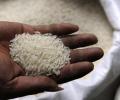
Increasing sugar production shall create problems for the industry, whereas boosting ethanol output can bring rich returns, Union Minister Nitin Gadkari told sugar mills on Wednesday. Speaking at a conference on sugar and ethanol, organised by the Indian Sugar Mills Association, Gadkari surprised the audience comprising senior executives of sugar mills by stating that the future will become bleak for the industry if it continues to churn out high quantities of sugar. "We need more ethanol than sugar. Also, bio-ethanol is the way to go as it can be stored for a longer duration as compared to conventional ethanol. "If you increase sugar production, it will create more problems for you.

The country's two top telcos, Reliance Jio and Airtel, are working overnight to undertake one of the fastest global roll-outs of 5G services in any country just a month down the line. India might be late in the game (already 70 countries have some kind of 5G and there are 698 million 5G subscribers across the world), but it's moving at breakneck speed. In his speech at the Reliance Industries AGM, Mukesh Ambani unveiled his plan to roll out the fastest 5G network in the world, starting from four metros in October but hitting every town taluka and tehsil - there are some 5,600 of them - in the country in 18 months.

At a time when Apple delivered its flagship line of new products on schedule despite battling a year of supply-chain turmoil, India could account for at least 12 per cent of the free-on-board (FoB) value of Apple Inc's iPhones manufactured by its vendors globally by 2025-26 (FY26). The number represents a significant shift for the Cupertino-based company's over-dependence on China, where 95 per cent of its phones are still being made. India's growing importance can be seen from the fact that in 2021-22 (FY22) - the first year of the production-linked incentive (PLI) scheme (the scheme was extended by a year due to the pandemic) - the FoB value of iPhones made in the country was $1.75 billion, translating into less than 2 per cent of the global value.

Indian plants -- who plan to begin production with 28 nano metre chips -- will take two to four years to get off the ground. By that time, in the fast changing world of chip making, the global market would have shifted to 22 nm.

Reliance Jio is close to finalising its contract with telecom gear maker Ericsson to roll out its 5G network in Mumbai and Maharashtra and Kolkata and West Bengal in the first phase of its launch in October. And it is going with Nokia for the lucrative Delhi circle, and Chennai, which includes Tamil Nadu, say sources aware of the development. This is the first time that Jio is opting for multiple vendors.

A few days ago, Reliance Retail surprised the market by acquiring the Campa brand from Delhi-based Pure Drinks Ltd for Rs 22 crore. A successful cola brand in the eighties, especially in North India, Campa Cola thrived when Coke exited India in the late seventies. When the Atlanta-based major returned and PepsiCo set base in India, it went down fighting.

"In principle, the ask in return is that India should not support the G7 (Group of Seven) proposal. "A decision on this issue will be taken later following talks with all the partners," an official with the Ministry of External Affairs (MEA) said.These "substantial discounts" will be steeper than those offered by Iraq in the past two months, officials said.
 © 2026 Rediff.com - Advertise with us - Disclaimer - Privacy Policy - Sitemap - Feedback - About us - Terms of use - Grievances